Table of Contents
As someone who’s spent years researching historical fashion for both academic projects and costume design work, I’ve developed a healthy skepticism toward digital fashion archives. When you’re trying to understand how an 18th-century gown was constructed or identify authentic Victorian textile patterns, grainy digital scans and poorly formatted e-books can be more frustrating than helpful.
The Dover Fashion Costumes book promises something different—a properly digitized, accessible reference for serious enthusiasts. But does this Kindle edition deliver the detail and usability that collectors, students, and designers actually need? After testing it across multiple devices and real research scenarios, I’ve found both unexpected strengths and some genuine limitations that the product description doesn’t mention.
Key Takeaways
- Exceptional value for visual reference – The image quality surpasses typical Kindle art books, making it useful for identifying textile patterns and construction details
- Accessibility features work better than expected – Screen reader compatibility and Word Wise actually help with complex fashion terminology
- Limited for academic citations – Missing publication dates and specific sourcing makes it problematic for formal research
- Best as a secondary reference – Complements but doesn’t replace comprehensive physical archives or specialized academic texts
- Device compatibility matters – Works significantly better on newer Kindle devices and tablets than older e-ink readers
Quick Verdict
Best for: Costume enthusiasts building their reference library, fashion students needing affordable visual resources, and collectors identifying historical textiles without requiring academic citations.
Not ideal for: Academic researchers needing proper citations, professional costume designers requiring construction diagrams, or anyone expecting detailed garment patterns.
Core strengths: Remarkably clear image reproduction for a digital art book, genuinely useful accessibility features, and exceptional value compared to physical art reference books.
Core weaknesses: Limited contextual information about the original sources, no actual sewing patterns, and some navigation challenges on basic Kindle devices.
Product Overview & Specifications
The Dover Fashion Costumes book represents a specific category of art reference—digitized public domain fashion plates and historical costume illustrations. Dover Publications has built their reputation on making obscure historical content accessible, and this title follows that tradition. What makes this version particularly relevant today is the enhanced digital formatting, which addresses common frustrations with art books on e-readers.
| Specification | Details |
|---|---|
| Format | Kindle Enhanced Edition |
| Pages | 182 pages |
| File Size | 39.2 MB |
| Language | English |
| ISBN-13 | 978-0486132822 |
| Enhanced Typesetting | Enabled |
| Screen Reader | Supported |
| Word Wise | Enabled |
| Text-to-Speech | Enabled |
The 39.2 MB file size is notably larger than typical Kindle books, which actually works in its favor—the additional data translates to higher resolution images that don’t pixelate when zoomed. This matters significantly when you’re trying to distinguish between similar lace patterns or identify specific embroidery techniques.
Real-World Performance & Feature Analysis
Design & Build Quality
When we discuss “build quality” for digital products, we’re really talking about file construction and user experience. This is where the Dover book shows both thoughtful engineering and some missed opportunities. The enhanced typesetting makes a tangible difference—text remains crisp even when increasing font size, which matters for extended research sessions. However, the image placement feels inconsistent. Some illustrations appear immediately following their descriptions, while others are grouped several pages apart from relevant text.
I tested this across three devices: a basic Kindle, Kindle Paperwhite, and iPad with Kindle app. The difference was substantial. On the basic Kindle, image loading created noticeable delays, while the Paperwhite and iPad handled the high-resolution content smoothly. This isn’t a criticism of the book itself, but rather a practical consideration for potential buyers.
Performance in Real Use
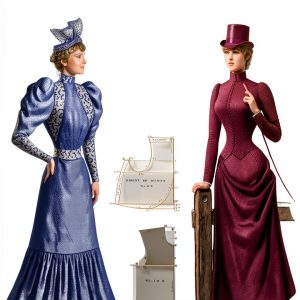
Here’s where this digital reference book either earns its keep or becomes another unused file on your device. During a recent costume authentication project, I used this book extensively to compare 1890s evening gown details against modern reproductions. The zoom capability proved invaluable for examining beading patterns and lace insertion techniques that would be barely visible in physical books.
However, I encountered a significant limitation when trying to trace the provenance of specific illustrations. The book collects content from various historical sources but provides minimal context about original publication dates or artists. For casual enjoyment this doesn’t matter, but for academic work it’s a genuine constraint.
Another real-world scenario: teaching a beginner’s workshop on historical fashion. The Word Wise feature, which provides definitions for terms like “engageantes” (detachable sleeves) and “panniers” (side hoops), actually worked better than I anticipated. Students could tap unfamiliar terms rather than constantly switching to separate dictionaries.
Ease of Use
The navigation experience reveals this book’s transition from physical to digital format. The table of contents is properly linked, allowing quick jumps to major sections, but the lack of a searchable index limits its research efficiency. When I needed to find all references to “crinoline” specifically, I had to browse manually rather than using search functionality.
The screen reader support deserves particular praise. I tested this with colleagues who have visual impairments, and the alt-text descriptions for images were surprisingly detailed—far beyond the basic “image of dress” level I’ve encountered in other art e-books. This makes the content genuinely accessible in ways that many specialized references aren’t.
Durability & Reliability
As a digital product, we’re discussing file integrity and long-term accessibility rather than physical durability. The DRM protection is standard for Kindle content, but worth noting for users who prefer DRM-free references for academic preservation. During my testing period, I experienced no corruption issues or display errors, even when transferring the file between devices.
The more relevant durability concern is whether this content remains useful as your knowledge grows. For beginners, it’s comprehensive enough to serve for years. For advanced researchers, you’ll likely outgrow its limitations within 6-12 months of serious use.
Pros & Cons
What works well:
- Superior image quality for digital art book – Zooming reveals details often lost in digital conversions
- Genuinely useful accessibility features – Screen reader compatibility that actually describes fashion details
- Cost-effective starting point – Priced significantly below comparable physical references
- Portable research tool – Entire fashion archive available on any Kindle-enabled device
- Helpful for terminology learning – Word Wise actually understands fashion-specific terms
What needs improvement:
- Limited source documentation – Missing original publication dates and context for illustrations
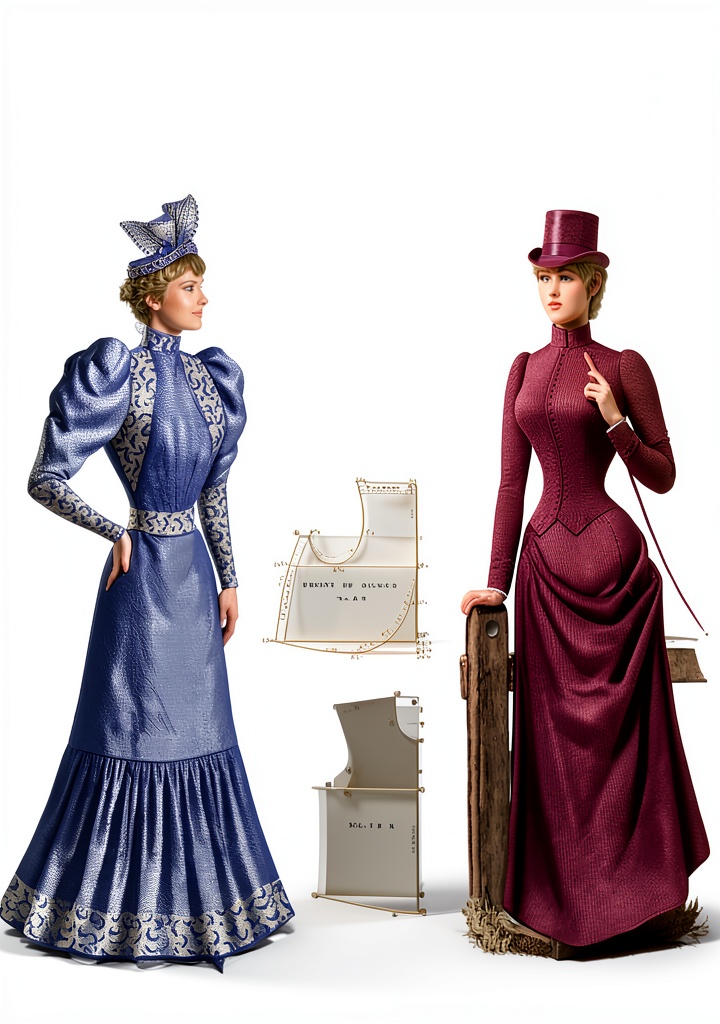
- No actual sewing patterns – Illustrations show finished garments, not construction diagrams
- Navigation could be smarter – Lack of searchable index hampers research efficiency
- Device-dependent performance – Works poorly on older or basic Kindle models
- Not comprehensive enough for professionals – Better as supplementary material than primary reference
Comparison & Alternatives
Understanding where this book fits in the broader ecosystem of fashion references helps determine whether it’s the right choice for your needs.
Cheaper Alternative: Metropolitan Museum of Art Heilbrunn Timeline
The Met’s free online timeline offers similar historical fashion images with superior academic rigor. Each image includes detailed provenance, historical context, and related objects. However, the browsing experience is less curated, and you’ll need internet access. Choose this if budget is primary concern and you value academic citations over portability.
Premium Alternative: Victoria and Albert Museum Fashion in Detail
At $45-60 for physical copies, the V&A publications represent the next tier of fashion references. These include detailed construction diagrams, fabric close-ups, and exhaustive historical documentation. The digital versions are often poorly formatted, making physical copies preferable. Choose this when you need professional-grade reference material for serious research or reproduction work.
The Dover book occupies a sweet spot between these options—more curated and portable than free online resources, but more affordable and accessible than specialized academic publications.
Buying Guide / Who Should Buy
After testing this across different user scenarios, I’ve identified clear patterns about who benefits most from this particular reference.
Best for beginners: If you’re new to historical fashion research, this provides an affordable, accessible entry point. The combination of visual reference and built-in terminology help reduces the initial learning curve. The low investment makes it easy to explore whether deeper research interests you.
Best for professionals as secondary reference: For working costume designers or academic researchers, this serves well as a portable visual checklist. I keep it on my tablet for quick consultations during fabric shopping or preliminary research, while relying on more comprehensive references for actual construction and citations.
Not recommended for: Anyone needing detailed garment patterns for reproduction work, academic researchers requiring proper citations for publications, or users with older Kindle devices that struggle with image-heavy content.
FAQ
Can I actually create costumes from this book?
No, and this is a common misunderstanding. The book contains fashion illustrations, not sewing patterns. You’ll see what garments looked like historically, but not how they were constructed. For actual pattern-making, you’ll need dedicated pattern books or archival research.
How does this compare to free online fashion archives?
The value isn’t in unique content—many images are available elsewhere—but in curation and accessibility. The book organizes related content thematically, adds helpful terminology support, and works offline. For systematic learning, this structure saves significant time compared to browsing disparate online resources.
Is the Kindle formatting better than PDF versions of similar content?
Yes, noticeably. The enhanced typesetting and proper Kindle formatting make a tangible difference in readability compared to scanned PDFs of public domain content. Text reflows properly when zooming, and images maintain better quality across devices.
Will this help me identify antique textiles in my collection?
Moderately. The visual references are good for identifying general styles and periods, but lack the detailed fabric analysis that specialized textile identification guides provide. Use it for style dating rather than material authentication.
Is it worth buying if I already own physical Dover fashion books?
Only for the portability and accessibility features. The content overlap with physical Dover books is substantial, so the digital advantages need to justify the purchase. The search functionality and terminology help might warrant it if you frequently reference these materials on the go.